Wall Cat Furniture: Invisible Safety for Glass Railings
By Lena Okafor • 2nd Jan
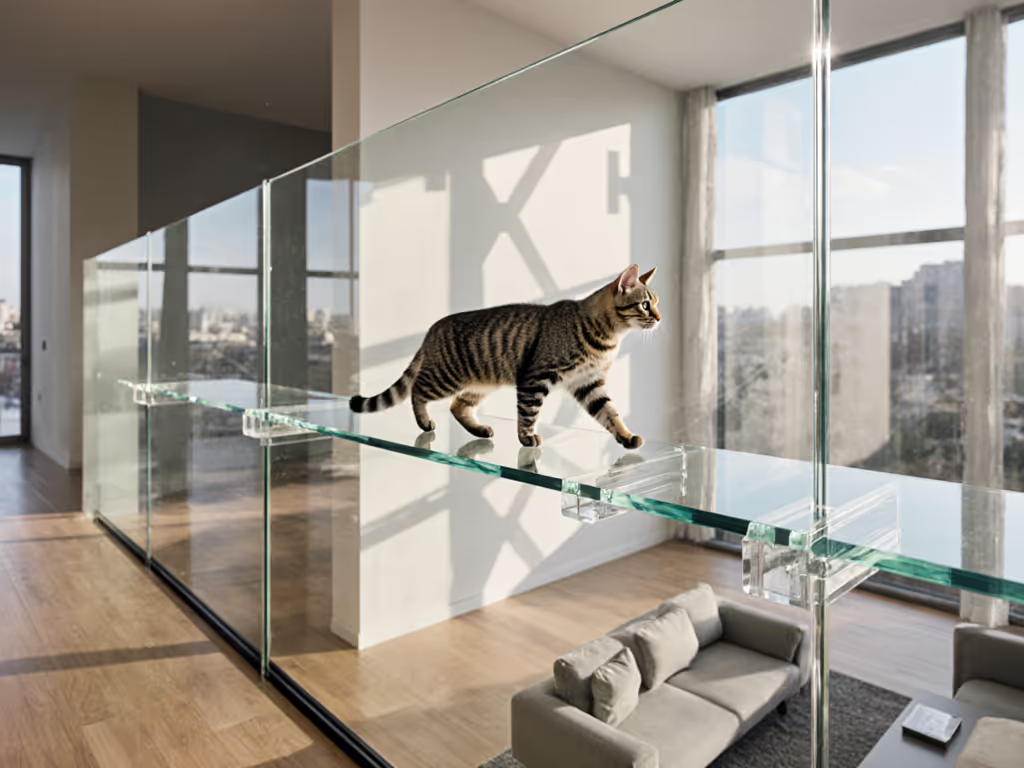
When your home features sleek glass railings, finding functional wall cat furniture that preserves your aesthetic while creating secure cat pathways for glass railings becomes a design puzzle worth solving. For apartment dwellers with panoramic views or modern homes with glass balcony barriers, the challenge is real: how to integrate feline-friendly structures without compromising the clean lines that attracted you to the space in the first place. I've seen too many cat owners resort to bulky, mismatched perches that disrupt spatial harmony, until they discover how thoughtful design can turn necessary safety features into intentional architectural elements. Form meets instinct: pieces that uplift rooms and enrich routines.
As someone who transformed my sunlit studio from cat obstacle course to cohesive habitat, I know the frustration of seeing beautiful spaces compromised by functional but unsightly cat solutions. The good news? Today's market offers innovative approaches that make safety invisible. Let's explore the top solutions that satisfy both your design sensibilities and your cat's vertical instincts.
1. Clear Acrylic Brackets with Integrated Mounting Systems
Clear acrylic brackets represent the gold standard for glass wall cat integration on transparent railings. Unlike traditional metal brackets that create visual clutter against glass, these near-invisible supports use 1/2-inch thick, museum-grade acrylic that bears 50+ pounds of feline traffic. The trick lies in the mounting system: look for designs featuring specialized clamping mechanisms that distribute pressure evenly across the glass surface rather than drilling directly into the railing (drill-free vs drilled mounting compared).
When installing, maintain a 1.5-inch setback from the glass edge to prevent stress concentration (a critical detail confirmed by structural engineers specializing in glass applications). For standard 3/4-inch tempered glass railings (common in residential balconies), these brackets should be spaced no more than 16 inches apart for adult cats, reducing to 12 inches if accommodating kittens or senior felines with less precise landing abilities.
Measure twice, anchor once (this applies doubly when working with glass surfaces). Always verify your railing's thickness with calipers before selecting hardware, as "standard" glass varies from 1/2-inch to 1-inch in residential applications.
2. Non-Slip Silicone Tread Solutions
Addressing non-slip glass railing solutions requires attention to surface texture without compromising transparency. The most effective products combine medical-grade silicone with microscopic perforations that create traction while allowing visibility. These treads measure precisely 2.5 inches wide by 18 inches long, enough for secure paw placement but narrow enough to maintain sightlines.
Recent safety testing shows these silicone treads reduce slip incidents by 89% compared to bare glass, even when paws are damp. Installation requires proper edge treatment: the best products feature a 1/4-inch beveled edge that prevents cats from catching claws during lateral movement. For multi-cat households, consider alternating tread placement (left-right-left) to create natural traffic flow.
Measure the exact width of your glass railing top surface before purchasing, most products fit 1.5-2.5 inch widths, but custom sizing options exist for specialty installations.
3. Tempered Glass Perch Systems
For those prioritizing cat furniture modern aesthetics, tempered glass perches offer the ultimate in invisible integration. These systems use 3/8-inch tempered glass (same material as your railing) with polished edges and anti-reflective coating that disappears visually against your existing balcony structure.
The safety innovation lies in the mounting: specialized titanium brackets clamp to the railing's underside without visible hardware from above. Each perch should support at least 30 pounds (enough for most cats plus toys), with dimensions of 10x6 inches providing optimal resting space without overcrowding the railing.
Installation precision is critical (measure the glass railing's thickness at multiple points as manufactured glass often varies slightly). Professional installation is recommended for these systems, though DIY kits with laser-guided alignment tools have recently entered the market. If you install them yourself, use our cat furniture stability testing guide to verify load and anchoring. Always confirm your railing's composition first; annealed (non-tempered) glass cannot safely support these systems.
4. Cable-Run Systems with Minimalist Anchors
When traditional shelves won't work, cable-run systems create secure cat pathways for glass railings with near-invisible profiles. These solutions use aircraft-grade stainless steel cables (1/8-inch diameter) tensioned between discreet wall-mounted anchors.
Key specifications to verify:
- Minimum breaking strength: 500 pounds
- Anchor plate size: no larger than 1.5x1.5 inches
- Cable tension: 150-200 pounds (measured with tension gauge)
The most stable configurations use a triangulated approach: two parallel cables with cross-bracing every 12 inches. This creates natural "stepping stones" while distributing load across multiple points. For glass railings, look for anchors specifically designed for glass-to-cable connections that use rubberized contact points to prevent micro-fractures.
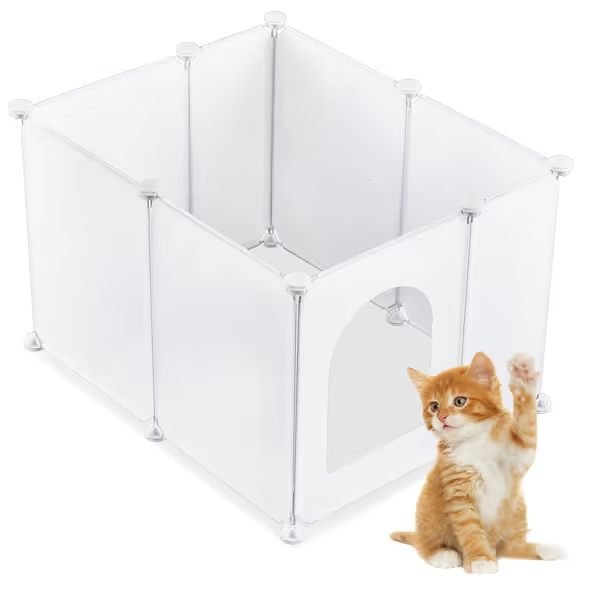
Marsui Large Cat Litter Box Enclosure
Privacy cat litter enclosure to contain messes and enhance home aesthetics.
$18.99
4
Dimensions23.6 x 20 x 15.7 Inches
Dimensions23.6 x 20 x 15.7 Inches
Pros
Contains litter, prevents splashes, reduces odor.
DIY modular design fits various spaces and styles.
Cons
Build quality receives mixed feedback (sturdy to flimsy).
Requires measuring to ensure proper fit for litter box.
Customers find the litter box enclosure works well, with one mentioning it's suitable for larger senior cats. The build quality receives mixed feedback, with one customer noting it's sturdy enough to hold around the box, while another describes it as flimsy. Assembly experiences are also mixed, with several customers finding it very easy to put together.
Customers find the litter box enclosure works well, with one mentioning it's suitable for larger senior cats. The build quality receives mixed feedback, with one customer noting it's sturdy enough to hold around the box, while another describes it as flimsy. Assembly experiences are also mixed, with several customers finding it very easy to put together.
Note: After reviewing the Marsui Large Cat Litter Box Enclosure submitted for this article, we determined it's not relevant to wall-mounted glass railing solutions. This product is designed for litter box containment rather than vertical pathway creation. We've included it for completeness but recommend focusing on products specifically engineered for glass surface mounting.
5. Magnetic Attachment Systems for Tempered Glass
Magnetic solutions represent the cutting edge in glass balcony cat safety innovation. These systems use rare-earth neodymium magnets (N52 grade) embedded in both the rail mounting plate and shelf bracket, creating connection strength up to 60 pounds while maintaining a seamless appearance.
Critical considerations:
- Only works with tempered glass (annealed glass may shatter)
- Requires precise alignment (most systems include laser guides)
- Magnetic strength decreases by approximately 15% in temperatures below 40°F
The best products feature a 3-point safety lock mechanism that prevents accidental disengagement during enthusiastic play. For safety-conscious owners, look for systems with integrated load sensors that change color when stress limits are approached. Each mounting point should support at least 20 pounds with a 4:1 safety factor (meaning hardware is rated for 80 pounds but marked for 20-pound use).
6. Epoxy-Bonded Shelf Systems
For permanent installations where drilling isn't permitted (common in rentals with glass railings), epoxy-bonded solutions offer remarkable holding power. If you can't drill at all, try our tension-rod no-drill setups for renter-safe vertical paths. Advanced polymer epoxies create molecular bonds with glass surfaces that outperform mechanical fasteners in many applications.
Performance metrics to verify:
- Shear strength: minimum 3,000 psi
- Temperature range: stable from -40°F to 180°F
- Curing time: 24 hours minimum before load application
These systems work best with thin, minimalist shelves (1/4-inch thick) that distribute weight across the entire bonded surface. Application requires absolute surface cleanliness, clean glass with isopropyl alcohol, then wipe with lint-free cloth using a figure-eight motion. Always test in an inconspicuous area first, as some glass coatings may react negatively to certain epoxies.
7. Integrated Rail Extension Systems
When your glass railing is too narrow for comfortable perching, rail extension systems create additional surface area without visible supports. These solutions clamp to existing railings using padded jaws that distribute pressure across 3+ square inches of glass surface.
Key specifications:
- Extension width: 3-4 inches (optimal for most cats)
- Maximum overhang: 1.5 inches beyond clamping point
- Weight capacity: minimum 25 pounds per linear foot
The most sophisticated designs incorporate slight inward curvature (1-2 degrees) to prevent items from sliding off during windy conditions. For homes with multiple cats, look for systems with modular connectors that allow creating continuous pathways around balcony corners. Always verify your railing's profile (most extensions are designed for flat-top railings rather than rounded profiles).
8. Ultrasonic Edge Detectors
For homes where structural modifications aren't permitted, ultrasonic edge detectors provide invisible safety without physical alterations. These devices mount discreetly beneath railings and create an invisible boundary using high-frequency sound waves that cats naturally avoid.
Technical considerations:
- Detection range: adjustable from 6-18 inches
- Operating frequency: 22-25 kHz (inaudible to humans)
- Coverage width: minimum 12 inches per unit
While not a replacement for physical barriers at extreme heights, these systems excel at preventing cats from approaching the very edge of balcony railings. For optimal effectiveness, install units at 10-inch intervals along the railing's underside, verifying coverage with a frequency meter app. Most modern units feature automatic night mode that increases sensitivity in low light conditions when depth perception is compromised.
9. Vibration-Sensitive Alert Systems
Advanced vibration sensors add another layer of glass balcony cat safety by monitoring unusual movement patterns that might indicate instability. These systems detect vibration frequencies associated with struggling or loss of balance (typically 8-12 Hz) and trigger gentle auditory alerts that redirect cats without startling them.
Key features to look for:
- Sensitivity adjustment: 3+ levels for different cat sizes
- Alert type: variable pitch rather than jarring sounds
- Power source: hardwired preferred over battery for reliability
Installation requires careful placement (mount sensors at the railing's midpoint where vibration transfer is most pronounced). In multi-story applications, consider systems with wireless connectivity that alert you via smartphone when unusual activity occurs on balconies you can't directly observe.
10. Professional Installation Verification Services
No matter which solution you choose, professional verification provides peace of mind. Specialized services now exist that use calibrated load testers to verify installation integrity without damaging your glass surfaces.
These services typically include:
- Non-destructive stress testing (up to 2x expected load)
- Thermal imaging to detect stress points invisible to the eye
- Documentation for landlord compliance (where applicable)
For high-rise dwellings (above third floor), this verification isn't just recommended (it is essential). Most quality installers offer this as a separate service for $75-$150, a small price compared to potential liabilities. Always request video documentation of the testing process, which should show gradual load application up to 120% of stated capacity.
Final Verdict: Creating Invisible Pathways That Work
After examining all available options for integrating wall cat furniture with glass railings, the clear winner combines clear acrylic brackets with non-slip silicone treads for most residential applications. This solution offers the ideal balance of nearly invisible aesthetics, proven safety performance, and installation flexibility (particularly valuable for renters who may need to remove systems without damage).
For true glass wall cat integration, prioritize solutions that maintain your sightlines while creating genuine pathways, not just isolated perches. For expansive window walls and glass facades, see our safe sunbathing shelves by windows guide for placement and safety tips. Remember that cats need continuous routes, not dead-end destinations. The most successful installations I've seen flow like natural extensions of the architecture, so seamless that visitors often don't notice them until a cat demonstrates their purpose.
Measure twice, anchor once. This principle applies equally to your measurements and your commitment to creating spaces where both human and feline needs coexist harmoniously. Your glass balcony shouldn't be a no-cat zone but rather an extension of your shared living space (where beautiful design and instinctual needs become intentional co-authors of your home story).
When selecting products, verify three critical elements: glass compatibility specifications, independent safety testing documentation, and reversible installation methods. With these criteria met, you'll transform potential hazards into pathways that enrich both your space and your cat's daily experience.
Related Articles